Showing posts with label guest posts. Show all posts

Wednesday, August 30, 2023

Hearts and Zucchini

   by

JoAnn Hallum


It's a new school year and I have seen all the printables and wooden blocks, the panic and the purchases, the general clamor to figure out how to home educate your kid.


A child is a human, and humans have brains, but they also have souls. They have things that interest them, and usually it’s an inconvenient interest. There are often piles of rocks stuffed into pockets and once I had a child who developed an obsession with collecting milk cartons. Three-year-olds are especially wild in their interests. But go ahead. Sit them down. Show them the letter A. We might as well all be bored together. We need to feed the cogs of the global economy, isn’t that why you were born!?


I am reading the Princess and the Goblin to my 8-year-old. Maybe you haven’t read it but you should know, for safety’s sake, the only way to keep Goblins away is to sing silly songs. A poetic chant. A laugh in the face of reason. The data monsters are real, they have come to the surface. They promise you knowledge but you’ll only get information.

You will have a head full of facts while you drown in reality.


Now is the time for poems. Now is the time to grow hearts and zucchini. Now is the time to read the books that kept us human for so long. There are enough computers. We need more harvest mice scampering by. We need more gardens with thistle and dock. We need the charms of the old words to keep the goblins away.

There was a time when people knew the world was full of forests, but they didn’t care enough about the trees to keep them. The Limberlost swamps are gone. We used to know about bread, and how to make it, but now we can find it easily, in its mummified form. We have lost our way, with pure knowledge, fake bread, and a lack of love. The cure is in the books, it’s in the words, it’s in the silly rhyme you learned in ancient times on a knee.

Beware! If you find knowledge, you will fall in love and everyone will think you are crazy for getting emotional about Charles Dickens. But the Goblins won’t get you, and you will have gotten an education. You will care, and you will know the lyrics to the songs that will carry us through. One, two, hit and hew!

This post is written by guest blogger JoAnn Hallum, a mom of four boys who homeschools them using AmblesideOnline. JoAnn writes on her Substack at JoAnn’s Substack | Collections | Substack


Tuesday, April 9, 2019

Creatures in Exile


Creatures in Exile 
Caitlin Beauchamp


Winter was so long, friends. In its damp final days, we jostled against each other in small rooms, aching to be turned loose into sun and wind. At last came an afternoon mild and golden. I sent my children outdoors shoeless, feeling that all our trials were over. And yet even out in the open air the indoor squabbles persisted. Everyone wanted the tricycle; everyone wanted one specific bucket; one child wanted to be alone in the sandpit and the others wouldn’t oblige. Call it desperation or wisdom, but all I could think to do was go to the creek. 

Our creek forms a little greenbelt through the neighborhood. It is narrow and shallow and sometimes nearly runs dry, yet it has carved a quiet gully for itself, sheltered by a scrubby wood. We stepped through an opening in the trees behind the neighborhood playground and began the steep descent into the gully, working our way slowly under low branches and over exposed roots until the little path leveled out and joined the main trail through the woods. We followed this upstream along the bank of the quiet green creek.  Somewhere ahead of us, almost obscured by the undergrowth, a lighter flickered in the hands of a young teenage boy. Pot smoke lingered in his wake. He walked ahead out of sight, and we turned onto an ascending path that carried us to the crest of a little waterfall. Above the fall, the creek bed widens to a shelf of craggy shale; here we settled in. My children scrambled over rocks and roots and splashed in their rainboots through the low, puddling sheet of water, in a world of their own. Already, the peace of the place had descended on them.  

My three small children and I find too many ways to get at odds with each other at home. For one thing, there are so many objects lying around to be scattered and misused. Then there are the burdens created by my expectations and visions. We mothers dream of lovely days, orderly and meaningful, with an aesthetic imbibed, perhaps, from the curated lives of internet strangers. One of my children just recently joined our family through foster care; in the wake of such life change, it becomes clear how impossible these aspirational images truly are. We do not frolic along a pristine riverside, charmingly dressed in linen and accessorized with butterfly nets. We go to the creek in humility and desperate need, and one child is still wearing pajamas. 

But in the simplicity of the creek we find refuge and solace. We have nothing particular to do or see or accomplish. There are rocks and sticks for everyone, few expectations, and plenty of space. There is also plenty of trash; we live in the city, after all, and this creek bears many different kinds of use. Below the waterfall, a permanent island of litter stagnates against the creek bank—fast food packaging, cigarette butts, bottles, beer cans. Still, always at the creek we are ministered to by things plain and true—water, stone, juniper, moss, sun and wind and the quiet passage of time.

The more I learn about the land beneath my overgrown city, the more I ache for it—the felled woods, the golden-brown prairies embroidered with green, shady streams. First came settlers and farmers, then the postwar housing boom raised a crop of little houses, row after row after row. Thank goodness, this creek and bit of woods were left to us. Here, in nests and burrows and shallow pools, a remnant remains of the old wilderness—armadillos, tortoises, hawks, even a few coyotes, caught on home security cameras prowling the neighborhood at night. These are creatures in exile, huddled here along this graffitied creek bank because it’s the closest thing they can find to the wild land they were made for.

I think about the coyotes often. I lost a cat to them once; I wasn’t over-fond of the cat, truthfully, and meanwhile the lurking presence of coyotes in suburbia is invigorating. I wonder if somewhere in their cells they hold ancestral memories of the prairie. I wonder if they feel the burden of their exile. Perhaps this is simple projection of my own longing. It seems to me that some of the solace I find at the creek is in the suggestion of what it was once, when the land was wilder. The creek itself is in exile, in a way—cut off from its sources, polluted, siphoned through drainage pipes where it becomes an inconvenience.

Reader, this is all a parable. It seems to me that we too are creatures in exile, burdened with longing for something lost. We live in an era of change and uncertainty; we feel unmoored from cultural memory. This sense of disconnectedness is the hallmark of modernity, prominent in our culture since the upheaval of the Great War. As mothers and educators we sense it keenly. When we think of the education we wish to give our children, we feel inadequate. Who will show us the way? There is too much we never learned ourselves, too much our communities have forgotten. We feel isolated and uncertain and we grow restless, searching hungrily for resources to bolster us. We accumulate stuff: more philosophies, more curricula, more picturesque manipulatives, more podcasts, more mentors, more activities. Still, our uneasiness and longing remain.

But it’s too pat a conclusion to say that our sense of lostness dates back neatly to the turn of the 20th century. In truth, we have been in exile almost ever since the world began, since the garden gates closed behind our first parents. We were made for a place more whole than anything we’ve known; deep in our souls, we’re always longing for Eden, our first home. Perhaps beneath our restless parenting aspirations and our nagging discontent lies this homesickness, though we seldom think to call it by name. Perhaps in calling it by name, we might find liberty. So: let us confess together that we secretly hope to restore ourselves and our children to Eden by our own heroic efforts. Let us also confess together that this was never possible. 

We stayed at the creek for two hours that afternoon. As the light began to fade, we gathered ourselves up and retraced our path through the trees. “I wish I was a creature so I could sleep here all night,” my daughter said as I lifted her down off the rock ledge where she had been quietly playing. How I wished it too, for I’d begun thinking of what waited for me at home: lunch dishes still on the table, breakfast dishes in the sink unwashed, foster care paperwork to complete, scattered toys, a sofa piled with laundry, the same old behaviors to discipline. It had been the kind of day that makes a mockery of all our brightest aspirations as mothers, homemakers, educators. And yet, our time at the creek gave me fresh courage, because it reminded me that while our children’s needs are profound, they are also simple. They thrive on good stories, rich relationships, hours of water and stones and sunshine.  They do not need our restless quest for the just-right resource, the elaborate system. They need us to learn to abide, to sink roots into a life that is deep and plain and true. 

As I write this, our creek is the scene of an active police chase. A car theft gone wrong, or so says neighborhood gossip, and now the suspect is hiding in the greenbelt somewhere while squad cars and a helicopter circle. Somewhat irrationally, my immediate prayer is that the moss won’t be badly trampled. Our creek isn’t pure, idyllic, or without risk. And yet the wild creatures find refuge there, and the trees spread their trash-tangled roots out along the water, and my children are given exactly what they need. 

Even so, havens of refuge remain for us while we are in exile. There are still deep places to be found, where goodness, truth, and beauty pool like water. These springs are muddied and imperfect, and they will never fully satisfy our longing, but they are full of blessing just the same. Meanwhile, let us not wish away our longing. If it is a burden, it is also a gift, pointing us to the Savior who is Himself the living water. He is making all things new, and He will lead the exiles home. 


~ Caitlin Beauchamp was among the first AmblesideOnline graduates. She is the daughter of AO Advisory board member Lynn Bruce, and was entirely schooled at home with Charlotte Mason methods from K-12th grades. Caitlin holds a BA and an MA in Creative Writing from the University of Texas at Dallas. She lives in Texas with her husband (also homeschooled), their two children, and sometimes a foster child. Caitlin is a writer and poet, and a regular contributor to Afterthoughts blog. Instagram @caitlin.beauchamp.

~ Painting by Sheila Atchley- a momentary glimpse of a work-in-progress, as yet untitled; ink on primed wood, 2019. Used with permission. Discover more of Sheila's art and writing at sheilaatchley.art and on Instagram @sheilaatchleydesigns.


Tuesday, August 7, 2018

Planning AmblesideOnline from Table to Table


By guest blogger Dawn Garrett


I've had a lot of people ask how I plan an AmblesideOnline term and how I'm helping my children to learn how to manage their work. Since the two go hand in hand, you get one long post :)


For the quick version, you can go to my profile on Instagram and click on the Highlight circle named "Assigning AO" (I think this is an in-app feature only)


We're doing Year 7 right now, so the first thing I do is go to that page and print the booklists (with the footnotes) and read through everything. I use this to determine what books we own and what we need and order all the books. That can be fun. I try to do this a little ahead of when I'm going to be planning - so a week or two before I'm planning to plan. Then I have these beautiful stacks of books.  For Year 7, I knew I'd be doing some adjustments for R-girl, so I printed both the Detailed and Basic/Lite version.


Once I have the books, I download the modifiable ODT schedule and open it in Open Office and copy/paste the table into your favorite spreadsheet application. It should look something like this:


This year, I pulled out some things that were going to be done with Jason and some things that were going to be done during our Morning Time, Whatchamacallit, and left the rest in the main block. You can see where there are blank rows as separators.

Once I've determined how we're going to approach the work, I create a separate spreadsheet for each week (you can see them across the bottom of the page) and put the week number and the dates for that week number).  Then I copy the subject column to each of those tabs and the assignments for that particular week to the tab. So the column headed Week 2 went on the tab named "2 April 23-27." I made a separate spreadsheet for all twelve weeks (plus break weeks).


Each week's tab looks something like the above. I then split out the reading that is assigned to, at maximum, 5 readings per week. Because I have them, I use the books as I'm doing this and some of them I'll put a small (in pencil) star where I want them to stop for the day.  I put the total number of pages assigned in a column and I have a column at the end for the count of readings for each book. That count is summed. In this case, there are 25 independent readings for the week. I don't count those that will be done in Morning Time or with Daddy.


I can then print that week's tab for them - I do hide the column that has the whole weekly reading assignment, and just give them the split up readings.

25 readings is easy to deal with - they can do 5 per day. They don't have to do any on Wednesday (except we generally do Ivanhoe and Beowulf as audiobooks on Wednesday), but they generally choose to in order to cut down the assignments on the other days.  On Monday, they write the assignments in the daily boxes at the bottom of the sheet. This helps them learn to evaluate a week's worth of work and divide it reasonably. We've worked hard to see how doing a little bit every day is better than cramming too much into any given day. We've looked at how that page number column comes into play.

Some day, I hope to hand them the week's assignments and they'll split out the readings, but that day is not yet.


This is the newest step and one we've done for a little more than a term, so it may not stay the same. So far it has worked beautifully. Because we have one set of books for three students, a standard timetable schedule is a nightmare. Also a nightmare: lessons that take all day because there's no sense of urgency or accountability. This system was borne of sheer desperation.

We do Whatchamacallit from 8:30-10:15. After a 15 minute break, the independent work portion of our day begins.

I have a duplexing printer, so I print the above form on the back of their weekly assignment page.  Each day, the children take the book list they have made for the day, Math, Latin, a written narration, and penmanship and assign the work to half-hours. Some things take a full half hour, some don't. They have to be careful with the different books and assign them in appropriate blocks. They have to plan if they're going to read with someone else, or that they don't plan the same books at the same time. It takes some juggling and thought. I love it. So far, it has worked well, with just a few growing pains. It fits with my general philosophy of helping them learn to manage their own workload so they can be independent.

Now, I can start the pre-reading. It's plenty of work, but it's good work.

So, there you go - from AO and their weekly table to the individual day's table how we're planning AmblesideOnline at this time.

It's sure to change.


Dawn Garrett blogs at ladydusk.blogspot.com and is a 
collaborator of the CharlotteMasonIRL account on Instagram. 
She homeschools her three children in Central Ohio.

Friday, June 9, 2017

Sample Year One Schedule (Guest Post)

The usual caveats apply: this is one sample of one mom's work with one of her kids, and we are excited to be able to share it with you all. We hope it will give you ideas about your own schedules and be an encouragement. It's not a blanket endorsement, a recipe, or a straitjacket. It is meant to be a helpful example. Huge, huge thanks to Tanya for catching the AO spirit and letting us share it.

Tanya moderates a FB support group for San Diego Charlotte Mason Homeschoolers. I'll let her introduce herself:

I'm Tanya Stone. I've been homeschooling for 7 years, since my oldest entered Kindergarten. I've been using Ambleside Online for about 5 years. My children are 12, 11, 9, 7, and 5.


Do you have a schedule to share? Let us know!

Monday, June 5, 2017

Guest Post: Year 1 Review

We want to welcome back Diana, who has very graciously allowed us to host her review of Year one and how it worked for her. I was so excited to share her post that when I posted the year 3 review I forgot to mention two generic caveats:

1. This is how this year worked for Diana with her child. It's not to be considered a full endorsement by AO (neither is this very generic caveat to be seen as a disavowal of anything in particular). It's one example of how a family made AO their own. We hope it inspires you. It's not meant to be a recipe or a list of commands.

2. Any list of books in order from easiest to hardest is going to be just a bit subjective (Diana addresses this as well).  I recently read aloud a very easy picture book to a group of kindergartners- and I had to stop and explain things several times.  They all live on a tropical island.  Most have never lived in America (even the two or three with American parents).   While their English is excellent, among the class were children who had no idea what such things as a moose, a bonfire, autumn leaves, and jam were because they have never seen them or been exposed to them, or they use different terms.

So without further ado, here's Diana!

 Last month, I was able to write a guest post for Ambleside Online's official blog, Archipelago, detailing my family's journey through Year 3. Today I am writing a similar post about our experience with Year 1.

 This is my second time teaching Year 1, which was way more easy than the first time around since I, myself, have begun to wrap my mind around Charlotte Mason's philosophy. Of course, every home school is going to look different, even if we're using the same wonderful Ambleside Online curriculum. I definitely believe that our uniqueness (both strengths and weaknesses) as mothers and as a family at large are what makes each set of parents the best teacher of their own children. Just know going into this post that we are a very literate family. I mean, none of us have been awarded a Pulitzer or Nobel Prize, but both Dear Husband and I are working writers, and two (so far) of our three sons have been early readers. Maybe your family is more of a hands-on or science-y type. That is great! I hope that you are playing to your strengths and covering for your weaknesses just as we are striving to do.

 One more note about us. Our Year 1 student, L6, is ... well ... slightly different than most kids his age. First, we suspect that he may be on the autism spectrum. Although he gets along very well in this world, he has a few symptoms that have lead us to this theory. We have not pushed for a diagnosis in the past, but we may in the near future. 

Second, L6 is what some people call "gifted" but is better labeled "asynchronous." It's funny because you would think the higher the IQ the easier a child is to teach, but that's not always the case. Often an asynchronous child thinks differently or faster than their peers but still at an age appropriate maturity and emotional level; hence, the out-of-sync label. Basically, teaching an asynchronous child -- and "twice exceptional" if our suspicions of autism are correct -- can be very frustrating because you're not sure when to push for excellence or when to back off. Thankfully, AO's curriculum is a broad feast. It's absolutely perfect for an asynchronous child. Basically, if some of the stuff we do in Year 1 seems strange, it probably is just a little.

 Okay, so just like in my Year 3 review post, here is a list of the Year 1 books in order of hardest to easiest (in my humble opinion):
  • Parables of Nature (AO’s paraphrased edition) by Margaret Gatty (Literature)
  • Trial and Triumph by Richard Hannula (History Tales / Biography)
  • Just So Stories by Rudyard Kipling (Literature)
  • Paddle to the Sea by Holling C. Holling (geography)
  • The Burgess Bird Book by Thornton Burgess (Natural History / Science)
  • The Blue Fairy Book by Andrew Lang (Literature)
  • Viking Tales by Jennie Hall (History)
  • Bible: New King James Version (Bible)
  • Our/An Island Story by H.E. Marshall (History)
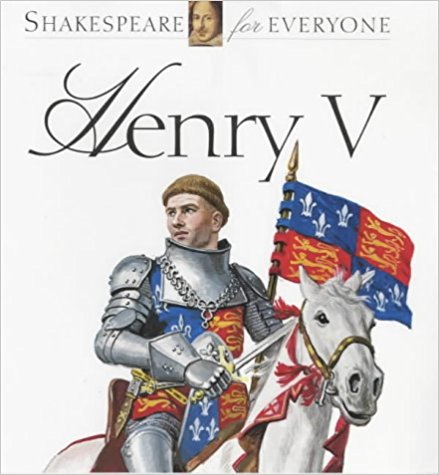
  • *Shakespeare for Everyone: Henry V, A Midsummer Night’s Dream, Taming of the Shrew, As You Like It (Literature)
  • The American history books by Ingri D'Aulaire
  • James Herriot's Treasury for Children (Natural History / Science)
  • Oxford Book of Children's Verse by Iona and Peter Opie (Poetry)
  • A Child's Garden of Verses by Robert Louis Stevenson (Poetry)
  • Now We are Six by A.A. Milne (Poetry)
  • Aesop's Fables (Literature)
  • Fifty Famous Stories Retold by James Baldwin (History)
*Our family does Shakespeare together in morning time. We have substituted Shakespeare for Everyone in place of Charles and Mary Lamb’s Tales from Shakespeare – a personal preference.

  Specific Scheduled Book Advice This ranking is very subjective. At the Year 1 level, I am prone to label a book "more challenging" because its stories are longer -- even if you chop them up into different sittings -- rather than just by an elevated writing style. There are several books on this list that L6 could "read" as far as de-code the words, but he could not read these at length and comprehend, so these have all been read aloud to him.

 If this is your first time doing Year 1 with a student, all of these texts are probably new to you. L6 is my second student to complete (nearly!) Year 1, so these books are my old friends but somewhat new to him.
  An Island Story and Trial and Triumph are both books we will be using for the next two years. L6 listened in quite a bit with British history when his older brother passed through it, so he has taken to An Island Story very easily. He especially enjoyed the chapters around the King Arthur era since we have read several Margaret Hodges picture books of the same setting (Saint George and the Dragon, The Kitchen Knight, Merlin and the Making of the King). L6 is a HUGE fan of picture books. He's a lap sitter and a snuggler. Bedtime reading is a big deal to this kid.

  Trial and Triumph contains a lot of death and church history, both which can be confusing to a six year old, but I'm glad to introduce some church history to my kiddos. I've seen many AO users comment that their child is too sensitive for this book, but so far my boys have weathered it well. In fact, L6 was very excited to pick up on the use of "creeds" in the chapter on the Nicaea counsel because we memorized the Apostle's Creed as part of our morning time recitation work this year.

 Fifty Famous Stories Retold is probably the easiest book 
Aesopscheduled for Year 1. This one, along with Aesop's Fables, is not only great for teaching history and literature, but they are also excellent for teaching children to narrate. L6 is already a master narrator. I'm not sure if it's from watching his older brother or if it's because he's particularly good at holding thoughts in his head.
The stories in these two books are so short and so focused that narrating their central theme is fairly easy. If your kiddo is struggling with narration, these two texts are great starting points to work on that. We happen to already own a different version of Aesop's Fables than the suggested Milo Winter edition. Rather than bouncing around the book to follow the AO schedule exactly, we just read them in the order they are placed in our book. No big deal!

 (Wcapehart's note: HOORAY!!  This is exactly correct!  Sometimes, the very best book is the one you already have!)

We're still reading through Viking Tales by Jennie Hall, but it's a very lovely addition to An Island Story, Year 1's main history spine. I'm so glad the AO Advisory made sure our Year 1 students had a little bit of understanding of the Norwegian influences in European history. This book sort of lays the groundwork to understand The Little Duke in Year 2 since the main character's family in that book is descended from the vikings. L6 is in love with Scandinavia because he attended a vacation bible school program that was all about Norway. When we busted out the Viking Tales in Year 1/term 3, he was very excited! This is also a good time to add in the D'Aulaire book Leif the Lucky, if you happen to own it.


 Speaking of D'Aulaire, the three of those books scheduled are all very fun and beautifully illustrated stories of American history. I've sometimes seen other CM communities give AO some flack about focusing so much on British history in Year 1. To each her own, I guess, but let me just chime in from my experience. First, the D'Aulaire books do introduce American history in Year 1. And, second, having seen my 9 year old pass through Years 1 and 2, absorbing all of this British history, I can tell you that when we got to honest-to-goodness American history in Year 3, he had a very good understanding of how the first English settlements came to be. It was astounding. Hang in there in Years 1 and 2 with your British / European history. You are building a foundation that will really begin to shine in Year 3.

  Paddle to the Sea by Holling C. Holling is really not that difficult of a book. It has some lingo in it that can be challenging, but all of the illustrations really help support the text. I rated it a bit challenging because it was L6's first foray into geography. L6 did some amazing map work (thanks to maps purchased from Beautiful Feet Books) to go along with the chapters. (This is geography. Do the map work!) I hear there's a short film about this book on available on YouTube, but we haven't watched it yet.


Holling's books transport you, as a reader, to another world. You really just have to jump in and be swept away. Yes, Year 1's main character is a wooden Indian in a canoe. Hold onto your hat, though, because in Year 2's Holling books the main characters are a tree and a bird carved from whale bone. Year 3? A hermit crab. Yep.

 As already noted, we traded Lamb’s Shakespeare for a line of books called Shakespeare for Everyone written by Jennifer Mulherin. I found the Georgian / Victorian language used in Lamb’s only confused Shakespeare’s Elizabethan era plays, so we opted for a modern retelling followed by film viewings.

 I know most people advise to "start with the comedies," but since my Year 3 student had just read about Henry V of England, we started our family-wide Shakespeare project with that play. Maybe it's just because we're a house full of mostly boys, but Henry V went over very, very well. In addition to the retelling, we studied the St. Crispin's Day speech ("We few, we happy few, we band of brothers ...") and watched the Kenneth Branagh film -- which my boys were happy to see included not only Gilderoy Lockhart, but also Professor Trelawney (Emma Thompson), Rubeus Hagrid (Robbie Coltrane), and Batman (Christian Bale).

 Because we do Shakespeare as a family, we had our own rotation going rather than juggling Year 1 and Year 3 assignments. Now I see that AO has moved to a Shakespeare rotation, we will probably try to jump on board (so long as we don’t repeat what we’ve done recently). 

Do not be intimidated by James Herriot's Treasury for Children. These are really just a bunch of picture books all in one binding. I don't know about your kids, but it really wasn't a stretch to read picture books about farm animals to my kids. Just enjoy these little gems, and feel free to read the entire book, even though not every chapter is scheduled. You may find that your Year 1 student wants to become a vet for a while after reading this book.


 The Scheduled Bible readings for Year 1 are basically just a list of popular tales from the Bible. My kids are all quite familiar with the New King James Version as that is what we read from at home all the time (and use for recitation). No matter the translation you prefer, don't go into Year 1 Bible worrying about whether you child understands absolutely everything. You don't have to turn this into Sunday School with a planned craft or song. Just take time to familiarize them with these iconic stories and get them used to reading from the Bible rather than a Bible-type book (even though there are some excellent Bible story books out there, too, like The Jesus Storybook Bible.) Make this time fun and relaxed, because the Bible is a book they will enjoy reading every single year with AO and, hopefully, daily throughout their lives.


 Speaking of enjoy, my kids and I have all enjoyed Parables of Nature. I know that sounds crazy because they are crazy-long. Sometimes I even find myself dreading to begin one of these, but I'm not sure why (other than length) because my kids always enjoy them. It's really the same with Andrew Lang's Blue Fairy Book. I think, perhaps, my kids appreciate parables and fairy tales more than I expect they will. Funny story: I took L6 (and his brothers) to see a live performance of Beauty and the Beast at our local community theater. After the show started, L6 (who was, of course, sitting on my lap) whispered to me that the show wasn't like the book. I told him it's supposed to be like the Disney movie ... and he had no idea what I was talking about! I completely forgot that he had never seen the film. He was primed to see a performance of the Blue Fairy Book story. That's a proud AO moment. ;-)


Oh, The Burgess Bird Book, how I dread you some days. It's not so much that the stories are a bit repetitive (describing birds can get old), but it's more that I know L6 wants to color a picture of each bird, and it's so difficult to find coloring sheets of birds that look like a Flycatcher or a Martin -- there are helpful mom-created web sites out there, though. I've also found several coloring images here. These resources just aren't comprehensive of the whole book. If someone systematically went through this book and created companion coloring pages, I would appreciate that! L6 wants to color each bird just right, and I hold my breath each time as his little perfectionist heart goes to work. I do appreciate this book, though, for getting us thinking about birds but still being a narrative form.


I'm glad we also have a field guide and online resources at our disposal to liven things up. We've looked up birds on YouTube and at the Audubon web site to see videos and hear bird calls. We also bird-watch at our feeder. We read a picture book called The Boy Who Drew Birds: A Story of John James Audubon this year. I thought that was a nice tie-in. Whatever you can do to blow the dust off Peter Rabbit, Jenny Wren, and all the endless parade of bird varieties the better. With my oldest son, I simply read the book, and he really didn't get much out of it. With L6 I've made these efforts to make it more of an interactive experience. Oh, and remember, you don't have to read the chapters in order (or even all of the chapters). Pick the chapters by the birds you want your child to learn.


I'm going to lump the poetry books together even thought they are each wonderful in their own way. It has amazed me with both of my Year 1 students how much kids love poetry if someone will just make time to read it to them. Kids are not nearly as afraid of rhyme and meter as we adults are. In fact, L6 and I recently read a free verse book called Love That Dog by Sharon Creech -- we loved it! It dealt with the death of a beloved pet dog, which is something our family just went through. Now We are Six by A.A. Milne is a particular favorite of my children's because it's so funny. All of the AO poetry options come in colorful illustrated editions, which is not always necessary, but is nice for a 6 or 7 year old.

I find Rudyard Kipling to be challenging. I want to like him, but I am just not there yet. Just So Stories scheduled in Years 1, 2, and 3 were hard for me. That said, I was able to punt those readings to Dear Husband for now. That sort of feels like cheating, but until I can love Kipling I wanted the kids to hear him read by someone who does. Another option is to get an audio book. It would probably help if I would spring for a picture book version, but right now we just have a cheap paperback. I need to get on board, though, because Kipling is sprinkled throughout the AO years. Thankfully, everyone in this house but me has loved Just So Stories.

Free Reads Free reads for Year 1 are mostly read-to-me type of selections. There are not many that L6 could and would read on his own and still comprehend. That said, he is a skilled reader and has read some on his own (those are in bold). This year we have read:
  • Charlotte's Web
  • Peter Pan
  • The Red Fairy Book (some stories)
  • St. George and the Dragon
  • The Velveteen Rabbit
  • Plenty of Fish
  • Seeds and More Seeds
  • Let's Get Turtles
  • Frog and Toad books
We have read countless books at bedtime as well. As previously noted, L6 loves picture books, and he is usually able to read any picture book (to himself or to his little brother) off the shelf at the library. I could never list all of them, but we tend to follow the advice of booklists from sources like The Read Aloud Revival, Housefull of Bookworms, Honey for a Child's Heart, and others.


 Much to my chagrin, L6 has read all of the Diary of a Wimpy Kid books and every single Dav Pilkey (Captain Underpants, etc.) book. Additionally, he has read some Roald Dahl books -- The BFG and Charlie and the Chocolate Factory for sure -- and we have read several books together as a family, including The Hobbit, The Borrowers, The Lion, The Witch, and the Wardrobe, and the Ramona series (Beverly Cleary).

  Various Daily Instruction

 We are a Math U See family. L6 is nearly finished with the Alpha book. He has taken to math very easily like his older brother. When the day comes that he is ready to run with math, I think he will be exceptionally good at it. Right now, though, he'd rather do his one page of math and then go ride his bike. I'm not going to argue with that at age 6.


 L6 has naturally good handwriting (much better than his older brother who struggles), so Copy Work is a breeze for him. We haven't really started Foreign Language with L6 just yet. I want him to go through Classical Academic Press' Song 
School Spanish curriculum with his friend, but that friend is not quite ready yet.

Since he is reading on his own, we are not taking time for daily Phonics or Reading Instruction, although I do love Starfall.com for those skills (in addition to actual books).

We do Recitation together in morning time, choosing to memorize favorite poems or Bible facts set to music.

 I am not great with Handicrafts. I hate that about myself, though, because I see others making things and wish I had that skill or drive. The boys are probably behind in this because Dear Husband and I are both inept, but we are trying. We do paint and draw a lot, and we do a lot of freewriting (ala Brave Writer). I've taught the boys a bit of handsewing.

  Weekly Instruction Subjects

 We very closely follow AO’s artist, composer, and folksong/hymn study rotations, utilizing morning time to do this as a family. Additionally, I have taken A9 and L6 to a couple local symphony performances for a little in-person music appreciation. A9 and L6 both take piano lessons from me at home, we hope someday that L6 might take violin lessons. With his hyper-focus abilities and dexterity, we think he might have a knack for it.

 We also learn about nature topics in morning time, according to my own reading of the Handbook of Nature Study, various picture books, and field guides. A9 and L6 both sketch in nature journals, and we belong to a weekly hiking group for kids (taking its cue from the Wild and Free movement). J4 and L6 both like to attend a monthly nature class at our local Conversation Department, and all three boys are involved in Cub Scouts.

 We also attend a local school co op one day a week, which gives the boys 4 hours of classroom experience each week. In order to fit this in, we stretch the 12 week AO terms into 15 week intervals.

  Sports and Recreation
 All three of our boys all take a weekly swim class designed for homeschoolers at a local indoor pool. L6 and his brothers are now playing Little League Baseball, and I think A9 and L6 might be interested in track next spring (2018). Our community also has a monthly "homeschool skate" at our local roller rink. We've only been once, but L6 loved it! He's turning out to be an individual sport type of guy (no surprise there!). Probably our best source of recreation, though, is living in a cul de sac where the boys ride their bikes and scooters up and down the street.

  An Introvert's Life Unlike my extremely extroverted oldest child, L6 is typically content to stay home and play in the backyard. He's probably more involved in activities than he would choose just because we travel as a pack, but it's probably good for him. We try to make concessions for both boys who are pulling in opposite directions. This is our Year 1. It's probably as different from yours as each child is uniquely made, but I hope this helps someone out there. Until next week (or so). I’m reading: Novel:
Moderately challenging books:
Stiff books:
Diana Save Save

Wednesday, May 24, 2017

Guest Post: Year 3 Review

We are excited about this!! You are about to be blessed, especially if you are looking at year 3.

 We want to introduce the Nelson family today, who would like to share with you the details of how they implement AO Year 3 in their homeschool. The Nelson family has three children -- all boys -- and they've been homeschooling with AO for three years, using Years 1, 2, and 3. Diana Nelson blogs at http://takingjoyblog.wordpress.com/ You'll want to bookmark that and follow her blog.

 We are so thrilled to be able to share this post with you.  It is the first in a new series we hope will grow- guest posts by AO users on how AO works for them.   We are so thankful that Diana graciously shared this post with us to use on the blog, and thus with all of you.

We hope her generosity and spirit of sharing freely encourages and inspires others the same way she has blessed us.  So without anymore fanfare- here's Diana on year 3:


As my oldest is about to enter Year 4 (we'll probably start the first Monday in August), I find myself looking for advice from Year 4 veterans. And, since we are just finishing up Year 3, I thought I'd offer that type of advice to those about to begin Year 3. First, and this is in no way scientific, here is a list of Year 3 Books in order of hardest to easiest (those in bold above the line are books I might allow my son to read independently occasionally; those in bold below the line are books he actually did read independently by the end of the year):
  • The Heroes by Charles Kingsley (Literature)
  • Marco Polo’s Adventures in China by Milton Rugoff (Geography)
  • Parables of Nature (AO’s paraphrased edition) by Margaret Gatty (Literature)
  • This Country of Ours by H.E. Marshall (History)
  • Trial and Triumph by Richard Hannula (History Tales / Biography)
  • Bible: New King James Version (Bible)
  • An / Our Island Story by H.E. Marshall (History)
  • *Shakespeare for Everyone: Henry V, A Midsummer Night’s Dream, Taming of the Shrew, As You Like It (Literature)
  • Children of the New Forest by F. Marryat (Literature)
  • The Jungle Book by Rudyard Kipling (Literature)
  • The Princess and the Goblin by George MacDonald (Literature)
  • Pagoo by Holling C. Holling (Natural History/Science)
  • Secrets of the Woods by William J. Long (Natural History/Science)
  • Leonardo Da Vinci by Emily Hahn (History Tales / Biography)
____________________________________________________
  • American Tall Tales by Adrien Stoutenberg (Literature)
  • Child's History of the World by Virgil Hillyer (History)
  • Landing of the Pilgrims by James Daugherty (History Tales / Biography)
  • **[all Year 3 poetry] William Blake, Sara Teasdale, Hilda Conkling, Henry Wadsworth Longfellow
  • Bard of Avon by Peter Vennema and Diane Stanley (History Tales / Biography)
  • Good Queen Bess by Diane Stanley (History Tales / Biography)
  • Science Lab in a Supermarket by Robert Friedhoffer (Natural History/Science)
  • A Drop of Water by Walter Wick (Natural History/Science)

*Our family does Shakespeare together in morning time. We have substituted Shakespeare for Everyone in place of Charles and Mary Lamb’s Tales from Shakespeare – a personal preference.

 **We do poetry in morning time or at "tea time," which is why he did not read independently.

  Specific Scheduled Book Advice Even though A9 can read several of the history / biography books on his own, I was hesitant to just hand it all over to him because we are still doing a mommy-and-me style timeline. A9 is probably an above average reader (he was an early reader), but he's still a reluctant one. He's the type to skim rather than read carefully, so we chose to read aloud more than was probably necessary.

 
An Island Story is an old friend. We've read it for the past three years, so that one is familiar and easy.

This Country of Ours starts out overlapping the timeline in An Island Story, so even though the chapters are longer, An Island Story has brought us up to this point.
Child's History of the World is another book that overlaps. It's by far the easiest reading level of the three main history books scheduled in Year 3.

 The historical biographies are all fairly easy reads. We did Leonardo Da Vinci as a read aloud just because in Term 1 our son was not quite mature enough to read independently AND give a good narration. (Plus, it's a little boring.) A lot of maturing happened this year! By the end of the year I was able to transition more and more over to A9.

 We started American Tall Tales as a read aloud, but he was able to read the second half independently with good oral narrations.

 The most challenging book in Year 3 is The Heroes by Charles Kingsley. Not only is it an elevated prose, but also my son was only slightly familiar with Greek gods and goddesses. A9 picked up Percy Jackson: The Lightening Thief at the library around the middle of Term 2 -- purely coincidentally -- and I think that helped him relate to The Heroes a little better.

 
Marco Polo's Adventures in China was the next most challenging. I know there are many options from which to choose for your Marco Polo book. We landed on Milton Rugoff's after I checked out a few options from our library (inter-library loan). I liked all of the photos, maps, and sidebar info in Rugoff's book. I have seen AO Advisory members comment about the many Marco Polo options, saying that all of them are great books, and the only reason there are so many options is so that there isn't a mad rush on just one version. All that to say, if you're planning Year 3, you'll be tempted to worry and fret over which Marco Polo book to choose. Relax and buy the most affordable and most available one on the AO list of options. And, remember the purpose of this text is to teach geography, so be sure to map out the Polos' travels. We also checked out a book from the library about what Mongolia is like today. I thought it a good idea that A9 understand that parts of Mongolia today are urban and industrial.

  Parables of Nature is another old friend. I would almost be tempted to let A9 read one of these stories independently, but frankly we just enjoy these together way too much. They are a time investment, but when we settle in to these stories we always have deep conversations.

 Even though Trial and Triumph is familiar from Years 1 and 2, I still read this one aloud just in case it raises any questions. There's a lot of death -- and church history (obviously) -- that I want to help A9 interpret. I've seen Catholic AO users say this book is very protestant, and I've seen protestant AO users say this book is very Catholic. I think the book does a fairly good job walking that line (we are protestant), and I can see why the AO Advisory has chosen it. Still, I find this book needs a chaperone.

 My kiddo is so familiar with the New King James Version of the Bible that I find that he gives excellent narrations. In fact, A9 asked to begin a written narration on New Testament reading assignments. Sometimes we also read the same selection out of The Message or the English Standard Version if the selection is particularly challenging (more typically in the Old Testament).

HenryV As already noted, we traded Lamb's Shakespeare for a line of books called Shakespeare for Everyone. I found the Georgian / Victorian language used in Lamb's only confused Shakespeare's Elizabethan era plays, so we opted for a modern retelling followed by film viewings. Because we do Shakespeare as a family, we had our own rotation going rather than juggling Year 1 and Year 3 assignments. Now I see that AO has moved to a Shakespeare rotation, we will probably try to jump on board (so long as we don't repeat what we've done recently).

 I turned over three of the literature selections (by MacDonald, Marryat, and Kipling) for Dear Husband to read to A9 in the evenings. They were all tackled at bedtime with very little involvement from me.

They read Little Pilgrim's Progress by Helen Taylor last year in Year 2. DH says he thinks A9 could have read these independently, but we thought it best to have Daddy pronouncing the words properly and doing character voices.

  Pagoo and Secrets of the Woods for Natural History / Science were reserved as read alouds so we could reinforce the science involved. Rather than giving these over to A9, we checked out additional picture books from the library that involved sea life and woodland creatures to support the scheduled books.

 The other two Natural History / Science books (by Science Lab in a Supermarket and A Drop of Water) were both books I felt I could hand to A9 and he would run with it. We did the experiments together, but really he required hardly any guidance at all.

  Free Reads A9 would not read any of the free reads unless made to do so. He would be much more likely to choose a book from the library based on his own interests (and he frequently does), so we compromised. A9 has assigned free read time during which I set a timer for 20 minutes, and he reads a Year 3 free read of his choosing. So far, in Year 3 he has read:
  • Alice's Adventures in Wonderland
  • Through the Looking Glass
  • Swallows and Amazons
  • King of the Wind
He has also read "on his own time" countless books in the fantasy genre, to which he seems naturally drawn. We've also completed several family read alouds this school year, including The Hobbit, The Borrowers, The Lion, The Witch, and the Wardrobe, Love That Dog, and the Ramona series (Beverly Cleary).

Various Daily Instruction

 A9 is still loving Math U See for his main math curriculum. He finished the Delta book around Easter and has jumped right into Epsilon. I'm also trying to get him interested in Beast Academy math, which is more problem solving style questions. Math nerdiness run in our family, so A9 is a bit ahead in math. I know many kids his age in the Beta or Gamma Math U See books. I love that those books are not grade-specific so kiddos can be comfortable doing their best without undo pressure.

 In Term 3 of Year 3, A9 began learning typing / keyboarding online at www.typing.com, which is a free program that saves his progress. We are still plugging away at Copy Work, but this child is perpetually behind in that department. Even though his handwriting is atrocious, his spelling and grammar are naturally exceptional (I mean that in a good way). I expect dictation in Year 4 to be a breeze.


For foreign language, we went with Classical Academic Press's curriculum. A9 started out with Song School Spanish and has since moved on to Spanish for Children Book A. Next year we will add Visual Latin 1 and see how we do. I'd love for him to add in French someday, but recently he has shown interest in learning Japanese. We shall see what will be.

  Weekly Instruction Subjects We very closely follow AO's artist, composer, and folksong/hymn study rotations, utilizing morning time to do this as a family. Additionally, I have taken A9 and L6 to a couple local symphony performances for a little in-person music appreciation. A9 and L6 both take piano lessons from me at home, and A9 took a guitar class and belongs to a community boys choir, which performs many folk songs and spirituals.


 We also learn about nature topics in morning time, according to my own reading of the Handbook of Nature Study by by Anna Botsford Comstock, various picture books, and field guides. A9 and L6 both sketch in nature journals, and we belong to a weekly hiking group for kids (taking its cue from the Wild and Free movement). Oh, and all three boys are involved in Cub Scouts. We also attend a local school co op one day a week, which gives the boys 4 hours of classroom experience each week. In order to fit this in, we stretch the 12 week AO terms into 15 week intervals.

  Sports and Recreation
 The boys all take a swim class designed for homeschoolers at a local indoor pool. During the winter, A9 played Upward Basketball and participated in an archery for kids program. All three boys are now playing Little League Baseball, and I think A9 and L6 might be interested in track next spring (2018). Probably our best source of recreation, though, is living in a cul de sac where the boys ride their bikes and scooters up and down the street.
  Whew! Man, that sounds like a lot, but remember we're not doing all of it every day. Also, A9 is an extreme extrovert. L6 is much more introverted, so I'm hoping he's going to take it easy on me. J4 seems to be somewhere in the middle. I hope this record of how our Year 3 played out helps someone out there.

 Until next week (or so).

 I'm reading:
Moderately challenging books:
Stiff books:
Diana Save Save

Monday, September 15, 2014

Mysticism Unveiled: The Gentle Heart of Hildegard of Bingen

By Megan Hoyt

Our guest poster today is Megan Hoyt, a longtime Ambleside Online user and the author of Hildegard's Gift (see details below).  Hildegard of Bingen is the AO composer for this term.

When I first began reading about the early life of Hildegard of Bingen, twelfth century composer, artist, herbalist, visionary, and lover of God, I really began to identify with this mysterious, solitary child. Like other good Catholics of the Middle Ages, her parents sent her away to live as an anchoress in total isolation at an early age. As their tenth child, they considered her a “tithe to the church,” which seems like a beautiful and godly idea unless you are the frightened little girl being sent away.

I was a frightened little girl, too – I was almost scared of my own shadow for most of my childhood and constantly worried about the social norms of school life, which seemed so elusive to me. I was mystical, too, in the sense that I genuinely “felt” connected to God when I worshipped at church. Unlike my peers, I cried while singing anthems in children’s choir. Christmas and Easter services? I sobbed through them. My parents called me sensitive. My Aunt Gretchen said I was one of God’s special ones. Looking back, I now wonder if I had a form of clinical depression.

Perhaps that’s why I so strongly identified with young Hildegard’s first teetering steps into the cell where she would spend years of her life, praying alone. I could definitely see myself being happy in isolation like Hildegard. And that is the duty of an anchoress, in case you didn’t know – they must live a secluded life as cloistered nuns. I wonder. Did Hildegard WANT to join the convent at Disibodenberg? She was only eight years old, after all. Did she agree with her parents’ decision? She certainly embraced her new life. And the world is better for it. But where does our genuine responsibility for accepting the advice of our parents end? Where does it begin? I really don’t have any idea. It’s a new thought for me – do we have choices when we’re very young? Do we get to decide to love God or are we simply expected to? See, I told you I was mystical. I could sit and ponder these things all day and never accomplish anything else.

Hildegard was already experiencing brilliant visions by the time she was sequestered with only one fellow nun, Jutta, nearby. She was unable to write her visions down without the assistance of a scribe, but it was clear early that she was a gifted young woman with big ideas that she insisted came directly from God. Here are a few things God was saying to her:

The fire has its flame and praises God.
The wind blows the flame and praises God.
In the voice we hear the word which praises God.
And the word, when heard, praises God.
So all of creation is a song of praise to God.

God hugs you.
You are encircled by the arms
of the mystery of God.

Good People,
most royal greening verdancy,
rooted in the sun,
you shine with radiant light.

I have read two or three of Hildegard’s books now and even written one of my own about her, Hildegard’s Gift, available through Paraclete Press. The more I read, the more I love this little girl with a giant heart. She seems so intimately acquainted with God and so firm in her convictions about how we should live. Reading even a few excerpted quotes from her chant music refreshes my soul and gives me fresh hope for the future. Taking time to contemplate, to brood, to rest in the presence of our Lord is so important and also richly rewarding in this fragmented, hurry along culture of ours.

The child Hildegard grew up, of course, as we all must. Her adult years were spent as an Abbess, leading others, writing letters of conviction and encouragement to popes, bishops, and princes. She was a strong woman with the courage to confront those living in sin. She also wrote plays, operettas, and listened for God’s whispered design for herbal remedies. Here are a few of her thoughts. They may seem a little silly now, but when she wrote them, there was no medical care, no medicine at all really.

The head of a catfish should never be eaten—it lacks viriditas (greening power) and will cause headaches and fevers.

Spelt rectifies the flesh, produces proper blood, and creates a happy mind and a joyful human disposition.

The wood and leaves of the nutmeg tree are harmful, but nutmeg itself gives a person a positive disposition and calms bitterness of the heart and mind. (Physica, p. 21)

Hildegard was a remarkable and complex woman with many talents, but she considered herself merely “a feather on the breath of God.” May we all trust God so much that we float on the wind of the Spirit, on the very breath of our sustaining God.

Megan Hoyt is a veteran writer with credits in television and print. Her children’s book, Hildegard’s Gift, illustrated by David Hill, was released by Paraclete Press in 2014. Recipes, a secret alphabet, and coloring sheets are all available at her website. For the Orthodox and Catholic among us, Hildegard’s Feast Day is September 17.