Monday, June 5, 2017

Guest Post: Year 1 Review

We want to welcome back Diana, who has very graciously allowed us to host her review of Year one and how it worked for her. I was so excited to share her post that when I posted the year 3 review I forgot to mention two generic caveats:

1. This is how this year worked for Diana with her child. It's not to be considered a full endorsement by AO (neither is this very generic caveat to be seen as a disavowal of anything in particular). It's one example of how a family made AO their own. We hope it inspires you. It's not meant to be a recipe or a list of commands.

2. Any list of books in order from easiest to hardest is going to be just a bit subjective (Diana addresses this as well).  I recently read aloud a very easy picture book to a group of kindergartners- and I had to stop and explain things several times.  They all live on a tropical island.  Most have never lived in America (even the two or three with American parents).   While their English is excellent, among the class were children who had no idea what such things as a moose, a bonfire, autumn leaves, and jam were because they have never seen them or been exposed to them, or they use different terms.

So without further ado, here's Diana!

 Last month, I was able to write a guest post for Ambleside Online's official blog, Archipelago, detailing my family's journey through Year 3. Today I am writing a similar post about our experience with Year 1.

 This is my second time teaching Year 1, which was way more easy than the first time around since I, myself, have begun to wrap my mind around Charlotte Mason's philosophy. Of course, every home school is going to look different, even if we're using the same wonderful Ambleside Online curriculum. I definitely believe that our uniqueness (both strengths and weaknesses) as mothers and as a family at large are what makes each set of parents the best teacher of their own children. Just know going into this post that we are a very literate family. I mean, none of us have been awarded a Pulitzer or Nobel Prize, but both Dear Husband and I are working writers, and two (so far) of our three sons have been early readers. Maybe your family is more of a hands-on or science-y type. That is great! I hope that you are playing to your strengths and covering for your weaknesses just as we are striving to do.

 One more note about us. Our Year 1 student, L6, is ... well ... slightly different than most kids his age. First, we suspect that he may be on the autism spectrum. Although he gets along very well in this world, he has a few symptoms that have lead us to this theory. We have not pushed for a diagnosis in the past, but we may in the near future. 

Second, L6 is what some people call "gifted" but is better labeled "asynchronous." It's funny because you would think the higher the IQ the easier a child is to teach, but that's not always the case. Often an asynchronous child thinks differently or faster than their peers but still at an age appropriate maturity and emotional level; hence, the out-of-sync label. Basically, teaching an asynchronous child -- and "twice exceptional" if our suspicions of autism are correct -- can be very frustrating because you're not sure when to push for excellence or when to back off. Thankfully, AO's curriculum is a broad feast. It's absolutely perfect for an asynchronous child. Basically, if some of the stuff we do in Year 1 seems strange, it probably is just a little.

 Okay, so just like in my Year 3 review post, here is a list of the Year 1 books in order of hardest to easiest (in my humble opinion):
  • Parables of Nature (AO’s paraphrased edition) by Margaret Gatty (Literature)
  • Trial and Triumph by Richard Hannula (History Tales / Biography)
  • Just So Stories by Rudyard Kipling (Literature)
  • Paddle to the Sea by Holling C. Holling (geography)
  • The Burgess Bird Book by Thornton Burgess (Natural History / Science)
  • The Blue Fairy Book by Andrew Lang (Literature)
  • Viking Tales by Jennie Hall (History)
  • Bible: New King James Version (Bible)
  • Our/An Island Story by H.E. Marshall (History)
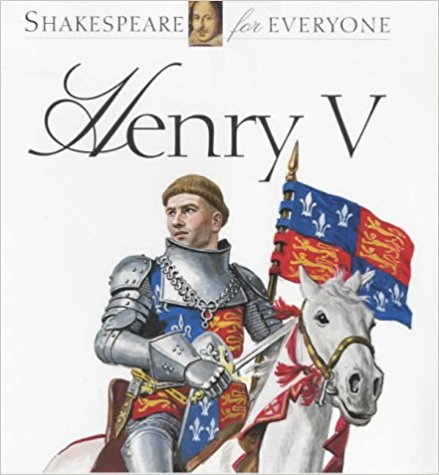
  • *Shakespeare for Everyone: Henry V, A Midsummer Night’s Dream, Taming of the Shrew, As You Like It (Literature)
  • The American history books by Ingri D'Aulaire
  • James Herriot's Treasury for Children (Natural History / Science)
  • Oxford Book of Children's Verse by Iona and Peter Opie (Poetry)
  • A Child's Garden of Verses by Robert Louis Stevenson (Poetry)
  • Now We are Six by A.A. Milne (Poetry)
  • Aesop's Fables (Literature)
  • Fifty Famous Stories Retold by James Baldwin (History)
*Our family does Shakespeare together in morning time. We have substituted Shakespeare for Everyone in place of Charles and Mary Lamb’s Tales from Shakespeare – a personal preference.

  Specific Scheduled Book Advice This ranking is very subjective. At the Year 1 level, I am prone to label a book "more challenging" because its stories are longer -- even if you chop them up into different sittings -- rather than just by an elevated writing style. There are several books on this list that L6 could "read" as far as de-code the words, but he could not read these at length and comprehend, so these have all been read aloud to him.

 If this is your first time doing Year 1 with a student, all of these texts are probably new to you. L6 is my second student to complete (nearly!) Year 1, so these books are my old friends but somewhat new to him.
  An Island Story and Trial and Triumph are both books we will be using for the next two years. L6 listened in quite a bit with British history when his older brother passed through it, so he has taken to An Island Story very easily. He especially enjoyed the chapters around the King Arthur era since we have read several Margaret Hodges picture books of the same setting (Saint George and the Dragon, The Kitchen Knight, Merlin and the Making of the King). L6 is a HUGE fan of picture books. He's a lap sitter and a snuggler. Bedtime reading is a big deal to this kid.

  Trial and Triumph contains a lot of death and church history, both which can be confusing to a six year old, but I'm glad to introduce some church history to my kiddos. I've seen many AO users comment that their child is too sensitive for this book, but so far my boys have weathered it well. In fact, L6 was very excited to pick up on the use of "creeds" in the chapter on the Nicaea counsel because we memorized the Apostle's Creed as part of our morning time recitation work this year.

 Fifty Famous Stories Retold is probably the easiest book 
Aesopscheduled for Year 1. This one, along with Aesop's Fables, is not only great for teaching history and literature, but they are also excellent for teaching children to narrate. L6 is already a master narrator. I'm not sure if it's from watching his older brother or if it's because he's particularly good at holding thoughts in his head.
The stories in these two books are so short and so focused that narrating their central theme is fairly easy. If your kiddo is struggling with narration, these two texts are great starting points to work on that. We happen to already own a different version of Aesop's Fables than the suggested Milo Winter edition. Rather than bouncing around the book to follow the AO schedule exactly, we just read them in the order they are placed in our book. No big deal!

 (Wcapehart's note: HOORAY!!  This is exactly correct!  Sometimes, the very best book is the one you already have!)

We're still reading through Viking Tales by Jennie Hall, but it's a very lovely addition to An Island Story, Year 1's main history spine. I'm so glad the AO Advisory made sure our Year 1 students had a little bit of understanding of the Norwegian influences in European history. This book sort of lays the groundwork to understand The Little Duke in Year 2 since the main character's family in that book is descended from the vikings. L6 is in love with Scandinavia because he attended a vacation bible school program that was all about Norway. When we busted out the Viking Tales in Year 1/term 3, he was very excited! This is also a good time to add in the D'Aulaire book Leif the Lucky, if you happen to own it.


 Speaking of D'Aulaire, the three of those books scheduled are all very fun and beautifully illustrated stories of American history. I've sometimes seen other CM communities give AO some flack about focusing so much on British history in Year 1. To each her own, I guess, but let me just chime in from my experience. First, the D'Aulaire books do introduce American history in Year 1. And, second, having seen my 9 year old pass through Years 1 and 2, absorbing all of this British history, I can tell you that when we got to honest-to-goodness American history in Year 3, he had a very good understanding of how the first English settlements came to be. It was astounding. Hang in there in Years 1 and 2 with your British / European history. You are building a foundation that will really begin to shine in Year 3.

  Paddle to the Sea by Holling C. Holling is really not that difficult of a book. It has some lingo in it that can be challenging, but all of the illustrations really help support the text. I rated it a bit challenging because it was L6's first foray into geography. L6 did some amazing map work (thanks to maps purchased from Beautiful Feet Books) to go along with the chapters. (This is geography. Do the map work!) I hear there's a short film about this book on available on YouTube, but we haven't watched it yet.


Holling's books transport you, as a reader, to another world. You really just have to jump in and be swept away. Yes, Year 1's main character is a wooden Indian in a canoe. Hold onto your hat, though, because in Year 2's Holling books the main characters are a tree and a bird carved from whale bone. Year 3? A hermit crab. Yep.

 As already noted, we traded Lamb’s Shakespeare for a line of books called Shakespeare for Everyone written by Jennifer Mulherin. I found the Georgian / Victorian language used in Lamb’s only confused Shakespeare’s Elizabethan era plays, so we opted for a modern retelling followed by film viewings.

 I know most people advise to "start with the comedies," but since my Year 3 student had just read about Henry V of England, we started our family-wide Shakespeare project with that play. Maybe it's just because we're a house full of mostly boys, but Henry V went over very, very well. In addition to the retelling, we studied the St. Crispin's Day speech ("We few, we happy few, we band of brothers ...") and watched the Kenneth Branagh film -- which my boys were happy to see included not only Gilderoy Lockhart, but also Professor Trelawney (Emma Thompson), Rubeus Hagrid (Robbie Coltrane), and Batman (Christian Bale).

 Because we do Shakespeare as a family, we had our own rotation going rather than juggling Year 1 and Year 3 assignments. Now I see that AO has moved to a Shakespeare rotation, we will probably try to jump on board (so long as we don’t repeat what we’ve done recently). 

Do not be intimidated by James Herriot's Treasury for Children. These are really just a bunch of picture books all in one binding. I don't know about your kids, but it really wasn't a stretch to read picture books about farm animals to my kids. Just enjoy these little gems, and feel free to read the entire book, even though not every chapter is scheduled. You may find that your Year 1 student wants to become a vet for a while after reading this book.


 The Scheduled Bible readings for Year 1 are basically just a list of popular tales from the Bible. My kids are all quite familiar with the New King James Version as that is what we read from at home all the time (and use for recitation). No matter the translation you prefer, don't go into Year 1 Bible worrying about whether you child understands absolutely everything. You don't have to turn this into Sunday School with a planned craft or song. Just take time to familiarize them with these iconic stories and get them used to reading from the Bible rather than a Bible-type book (even though there are some excellent Bible story books out there, too, like The Jesus Storybook Bible.) Make this time fun and relaxed, because the Bible is a book they will enjoy reading every single year with AO and, hopefully, daily throughout their lives.


 Speaking of enjoy, my kids and I have all enjoyed Parables of Nature. I know that sounds crazy because they are crazy-long. Sometimes I even find myself dreading to begin one of these, but I'm not sure why (other than length) because my kids always enjoy them. It's really the same with Andrew Lang's Blue Fairy Book. I think, perhaps, my kids appreciate parables and fairy tales more than I expect they will. Funny story: I took L6 (and his brothers) to see a live performance of Beauty and the Beast at our local community theater. After the show started, L6 (who was, of course, sitting on my lap) whispered to me that the show wasn't like the book. I told him it's supposed to be like the Disney movie ... and he had no idea what I was talking about! I completely forgot that he had never seen the film. He was primed to see a performance of the Blue Fairy Book story. That's a proud AO moment. ;-)


Oh, The Burgess Bird Book, how I dread you some days. It's not so much that the stories are a bit repetitive (describing birds can get old), but it's more that I know L6 wants to color a picture of each bird, and it's so difficult to find coloring sheets of birds that look like a Flycatcher or a Martin -- there are helpful mom-created web sites out there, though. I've also found several coloring images here. These resources just aren't comprehensive of the whole book. If someone systematically went through this book and created companion coloring pages, I would appreciate that! L6 wants to color each bird just right, and I hold my breath each time as his little perfectionist heart goes to work. I do appreciate this book, though, for getting us thinking about birds but still being a narrative form.


I'm glad we also have a field guide and online resources at our disposal to liven things up. We've looked up birds on YouTube and at the Audubon web site to see videos and hear bird calls. We also bird-watch at our feeder. We read a picture book called The Boy Who Drew Birds: A Story of John James Audubon this year. I thought that was a nice tie-in. Whatever you can do to blow the dust off Peter Rabbit, Jenny Wren, and all the endless parade of bird varieties the better. With my oldest son, I simply read the book, and he really didn't get much out of it. With L6 I've made these efforts to make it more of an interactive experience. Oh, and remember, you don't have to read the chapters in order (or even all of the chapters). Pick the chapters by the birds you want your child to learn.


I'm going to lump the poetry books together even thought they are each wonderful in their own way. It has amazed me with both of my Year 1 students how much kids love poetry if someone will just make time to read it to them. Kids are not nearly as afraid of rhyme and meter as we adults are. In fact, L6 and I recently read a free verse book called Love That Dog by Sharon Creech -- we loved it! It dealt with the death of a beloved pet dog, which is something our family just went through. Now We are Six by A.A. Milne is a particular favorite of my children's because it's so funny. All of the AO poetry options come in colorful illustrated editions, which is not always necessary, but is nice for a 6 or 7 year old.

I find Rudyard Kipling to be challenging. I want to like him, but I am just not there yet. Just So Stories scheduled in Years 1, 2, and 3 were hard for me. That said, I was able to punt those readings to Dear Husband for now. That sort of feels like cheating, but until I can love Kipling I wanted the kids to hear him read by someone who does. Another option is to get an audio book. It would probably help if I would spring for a picture book version, but right now we just have a cheap paperback. I need to get on board, though, because Kipling is sprinkled throughout the AO years. Thankfully, everyone in this house but me has loved Just So Stories.

Free Reads Free reads for Year 1 are mostly read-to-me type of selections. There are not many that L6 could and would read on his own and still comprehend. That said, he is a skilled reader and has read some on his own (those are in bold). This year we have read:
  • Charlotte's Web
  • Peter Pan
  • The Red Fairy Book (some stories)
  • St. George and the Dragon
  • The Velveteen Rabbit
  • Plenty of Fish
  • Seeds and More Seeds
  • Let's Get Turtles
  • Frog and Toad books
We have read countless books at bedtime as well. As previously noted, L6 loves picture books, and he is usually able to read any picture book (to himself or to his little brother) off the shelf at the library. I could never list all of them, but we tend to follow the advice of booklists from sources like The Read Aloud Revival, Housefull of Bookworms, Honey for a Child's Heart, and others.


 Much to my chagrin, L6 has read all of the Diary of a Wimpy Kid books and every single Dav Pilkey (Captain Underpants, etc.) book. Additionally, he has read some Roald Dahl books -- The BFG and Charlie and the Chocolate Factory for sure -- and we have read several books together as a family, including The Hobbit, The Borrowers, The Lion, The Witch, and the Wardrobe, and the Ramona series (Beverly Cleary).

  Various Daily Instruction

 We are a Math U See family. L6 is nearly finished with the Alpha book. He has taken to math very easily like his older brother. When the day comes that he is ready to run with math, I think he will be exceptionally good at it. Right now, though, he'd rather do his one page of math and then go ride his bike. I'm not going to argue with that at age 6.


 L6 has naturally good handwriting (much better than his older brother who struggles), so Copy Work is a breeze for him. We haven't really started Foreign Language with L6 just yet. I want him to go through Classical Academic Press' Song 
School Spanish curriculum with his friend, but that friend is not quite ready yet.

Since he is reading on his own, we are not taking time for daily Phonics or Reading Instruction, although I do love Starfall.com for those skills (in addition to actual books).

We do Recitation together in morning time, choosing to memorize favorite poems or Bible facts set to music.

 I am not great with Handicrafts. I hate that about myself, though, because I see others making things and wish I had that skill or drive. The boys are probably behind in this because Dear Husband and I are both inept, but we are trying. We do paint and draw a lot, and we do a lot of freewriting (ala Brave Writer). I've taught the boys a bit of handsewing.

  Weekly Instruction Subjects

 We very closely follow AO’s artist, composer, and folksong/hymn study rotations, utilizing morning time to do this as a family. Additionally, I have taken A9 and L6 to a couple local symphony performances for a little in-person music appreciation. A9 and L6 both take piano lessons from me at home, we hope someday that L6 might take violin lessons. With his hyper-focus abilities and dexterity, we think he might have a knack for it.

 We also learn about nature topics in morning time, according to my own reading of the Handbook of Nature Study, various picture books, and field guides. A9 and L6 both sketch in nature journals, and we belong to a weekly hiking group for kids (taking its cue from the Wild and Free movement). J4 and L6 both like to attend a monthly nature class at our local Conversation Department, and all three boys are involved in Cub Scouts.

 We also attend a local school co op one day a week, which gives the boys 4 hours of classroom experience each week. In order to fit this in, we stretch the 12 week AO terms into 15 week intervals.

  Sports and Recreation
 All three of our boys all take a weekly swim class designed for homeschoolers at a local indoor pool. L6 and his brothers are now playing Little League Baseball, and I think A9 and L6 might be interested in track next spring (2018). Our community also has a monthly "homeschool skate" at our local roller rink. We've only been once, but L6 loved it! He's turning out to be an individual sport type of guy (no surprise there!). Probably our best source of recreation, though, is living in a cul de sac where the boys ride their bikes and scooters up and down the street.

  An Introvert's Life Unlike my extremely extroverted oldest child, L6 is typically content to stay home and play in the backyard. He's probably more involved in activities than he would choose just because we travel as a pack, but it's probably good for him. We try to make concessions for both boys who are pulling in opposite directions. This is our Year 1. It's probably as different from yours as each child is uniquely made, but I hope this helps someone out there. Until next week (or so). I’m reading: Novel:
Moderately challenging books:
Stiff books:
Diana Save Save

Wednesday, May 24, 2017

Guest Post: Year 3 Review

We are excited about this!! You are about to be blessed, especially if you are looking at year 3.

 We want to introduce the Nelson family today, who would like to share with you the details of how they implement AO Year 3 in their homeschool. The Nelson family has three children -- all boys -- and they've been homeschooling with AO for three years, using Years 1, 2, and 3. Diana Nelson blogs at http://takingjoyblog.wordpress.com/ You'll want to bookmark that and follow her blog.

 We are so thrilled to be able to share this post with you.  It is the first in a new series we hope will grow- guest posts by AO users on how AO works for them.   We are so thankful that Diana graciously shared this post with us to use on the blog, and thus with all of you.

We hope her generosity and spirit of sharing freely encourages and inspires others the same way she has blessed us.  So without anymore fanfare- here's Diana on year 3:


As my oldest is about to enter Year 4 (we'll probably start the first Monday in August), I find myself looking for advice from Year 4 veterans. And, since we are just finishing up Year 3, I thought I'd offer that type of advice to those about to begin Year 3. First, and this is in no way scientific, here is a list of Year 3 Books in order of hardest to easiest (those in bold above the line are books I might allow my son to read independently occasionally; those in bold below the line are books he actually did read independently by the end of the year):
  • The Heroes by Charles Kingsley (Literature)
  • Marco Polo’s Adventures in China by Milton Rugoff (Geography)
  • Parables of Nature (AO’s paraphrased edition) by Margaret Gatty (Literature)
  • This Country of Ours by H.E. Marshall (History)
  • Trial and Triumph by Richard Hannula (History Tales / Biography)
  • Bible: New King James Version (Bible)
  • An / Our Island Story by H.E. Marshall (History)
  • *Shakespeare for Everyone: Henry V, A Midsummer Night’s Dream, Taming of the Shrew, As You Like It (Literature)
  • Children of the New Forest by F. Marryat (Literature)
  • The Jungle Book by Rudyard Kipling (Literature)
  • The Princess and the Goblin by George MacDonald (Literature)
  • Pagoo by Holling C. Holling (Natural History/Science)
  • Secrets of the Woods by William J. Long (Natural History/Science)
  • Leonardo Da Vinci by Emily Hahn (History Tales / Biography)
____________________________________________________
  • American Tall Tales by Adrien Stoutenberg (Literature)
  • Child's History of the World by Virgil Hillyer (History)
  • Landing of the Pilgrims by James Daugherty (History Tales / Biography)
  • **[all Year 3 poetry] William Blake, Sara Teasdale, Hilda Conkling, Henry Wadsworth Longfellow
  • Bard of Avon by Peter Vennema and Diane Stanley (History Tales / Biography)
  • Good Queen Bess by Diane Stanley (History Tales / Biography)
  • Science Lab in a Supermarket by Robert Friedhoffer (Natural History/Science)
  • A Drop of Water by Walter Wick (Natural History/Science)

*Our family does Shakespeare together in morning time. We have substituted Shakespeare for Everyone in place of Charles and Mary Lamb’s Tales from Shakespeare – a personal preference.

 **We do poetry in morning time or at "tea time," which is why he did not read independently.

  Specific Scheduled Book Advice Even though A9 can read several of the history / biography books on his own, I was hesitant to just hand it all over to him because we are still doing a mommy-and-me style timeline. A9 is probably an above average reader (he was an early reader), but he's still a reluctant one. He's the type to skim rather than read carefully, so we chose to read aloud more than was probably necessary.

 
An Island Story is an old friend. We've read it for the past three years, so that one is familiar and easy.

This Country of Ours starts out overlapping the timeline in An Island Story, so even though the chapters are longer, An Island Story has brought us up to this point.
Child's History of the World is another book that overlaps. It's by far the easiest reading level of the three main history books scheduled in Year 3.

 The historical biographies are all fairly easy reads. We did Leonardo Da Vinci as a read aloud just because in Term 1 our son was not quite mature enough to read independently AND give a good narration. (Plus, it's a little boring.) A lot of maturing happened this year! By the end of the year I was able to transition more and more over to A9.

 We started American Tall Tales as a read aloud, but he was able to read the second half independently with good oral narrations.

 The most challenging book in Year 3 is The Heroes by Charles Kingsley. Not only is it an elevated prose, but also my son was only slightly familiar with Greek gods and goddesses. A9 picked up Percy Jackson: The Lightening Thief at the library around the middle of Term 2 -- purely coincidentally -- and I think that helped him relate to The Heroes a little better.

 
Marco Polo's Adventures in China was the next most challenging. I know there are many options from which to choose for your Marco Polo book. We landed on Milton Rugoff's after I checked out a few options from our library (inter-library loan). I liked all of the photos, maps, and sidebar info in Rugoff's book. I have seen AO Advisory members comment about the many Marco Polo options, saying that all of them are great books, and the only reason there are so many options is so that there isn't a mad rush on just one version. All that to say, if you're planning Year 3, you'll be tempted to worry and fret over which Marco Polo book to choose. Relax and buy the most affordable and most available one on the AO list of options. And, remember the purpose of this text is to teach geography, so be sure to map out the Polos' travels. We also checked out a book from the library about what Mongolia is like today. I thought it a good idea that A9 understand that parts of Mongolia today are urban and industrial.

  Parables of Nature is another old friend. I would almost be tempted to let A9 read one of these stories independently, but frankly we just enjoy these together way too much. They are a time investment, but when we settle in to these stories we always have deep conversations.

 Even though Trial and Triumph is familiar from Years 1 and 2, I still read this one aloud just in case it raises any questions. There's a lot of death -- and church history (obviously) -- that I want to help A9 interpret. I've seen Catholic AO users say this book is very protestant, and I've seen protestant AO users say this book is very Catholic. I think the book does a fairly good job walking that line (we are protestant), and I can see why the AO Advisory has chosen it. Still, I find this book needs a chaperone.

 My kiddo is so familiar with the New King James Version of the Bible that I find that he gives excellent narrations. In fact, A9 asked to begin a written narration on New Testament reading assignments. Sometimes we also read the same selection out of The Message or the English Standard Version if the selection is particularly challenging (more typically in the Old Testament).

HenryV As already noted, we traded Lamb's Shakespeare for a line of books called Shakespeare for Everyone. I found the Georgian / Victorian language used in Lamb's only confused Shakespeare's Elizabethan era plays, so we opted for a modern retelling followed by film viewings. Because we do Shakespeare as a family, we had our own rotation going rather than juggling Year 1 and Year 3 assignments. Now I see that AO has moved to a Shakespeare rotation, we will probably try to jump on board (so long as we don't repeat what we've done recently).

 I turned over three of the literature selections (by MacDonald, Marryat, and Kipling) for Dear Husband to read to A9 in the evenings. They were all tackled at bedtime with very little involvement from me.

They read Little Pilgrim's Progress by Helen Taylor last year in Year 2. DH says he thinks A9 could have read these independently, but we thought it best to have Daddy pronouncing the words properly and doing character voices.

  Pagoo and Secrets of the Woods for Natural History / Science were reserved as read alouds so we could reinforce the science involved. Rather than giving these over to A9, we checked out additional picture books from the library that involved sea life and woodland creatures to support the scheduled books.

 The other two Natural History / Science books (by Science Lab in a Supermarket and A Drop of Water) were both books I felt I could hand to A9 and he would run with it. We did the experiments together, but really he required hardly any guidance at all.

  Free Reads A9 would not read any of the free reads unless made to do so. He would be much more likely to choose a book from the library based on his own interests (and he frequently does), so we compromised. A9 has assigned free read time during which I set a timer for 20 minutes, and he reads a Year 3 free read of his choosing. So far, in Year 3 he has read:
  • Alice's Adventures in Wonderland
  • Through the Looking Glass
  • Swallows and Amazons
  • King of the Wind
He has also read "on his own time" countless books in the fantasy genre, to which he seems naturally drawn. We've also completed several family read alouds this school year, including The Hobbit, The Borrowers, The Lion, The Witch, and the Wardrobe, Love That Dog, and the Ramona series (Beverly Cleary).

Various Daily Instruction

 A9 is still loving Math U See for his main math curriculum. He finished the Delta book around Easter and has jumped right into Epsilon. I'm also trying to get him interested in Beast Academy math, which is more problem solving style questions. Math nerdiness run in our family, so A9 is a bit ahead in math. I know many kids his age in the Beta or Gamma Math U See books. I love that those books are not grade-specific so kiddos can be comfortable doing their best without undo pressure.

 In Term 3 of Year 3, A9 began learning typing / keyboarding online at www.typing.com, which is a free program that saves his progress. We are still plugging away at Copy Work, but this child is perpetually behind in that department. Even though his handwriting is atrocious, his spelling and grammar are naturally exceptional (I mean that in a good way). I expect dictation in Year 4 to be a breeze.


For foreign language, we went with Classical Academic Press's curriculum. A9 started out with Song School Spanish and has since moved on to Spanish for Children Book A. Next year we will add Visual Latin 1 and see how we do. I'd love for him to add in French someday, but recently he has shown interest in learning Japanese. We shall see what will be.

  Weekly Instruction Subjects We very closely follow AO's artist, composer, and folksong/hymn study rotations, utilizing morning time to do this as a family. Additionally, I have taken A9 and L6 to a couple local symphony performances for a little in-person music appreciation. A9 and L6 both take piano lessons from me at home, and A9 took a guitar class and belongs to a community boys choir, which performs many folk songs and spirituals.


 We also learn about nature topics in morning time, according to my own reading of the Handbook of Nature Study by by Anna Botsford Comstock, various picture books, and field guides. A9 and L6 both sketch in nature journals, and we belong to a weekly hiking group for kids (taking its cue from the Wild and Free movement). Oh, and all three boys are involved in Cub Scouts. We also attend a local school co op one day a week, which gives the boys 4 hours of classroom experience each week. In order to fit this in, we stretch the 12 week AO terms into 15 week intervals.

  Sports and Recreation
 The boys all take a swim class designed for homeschoolers at a local indoor pool. During the winter, A9 played Upward Basketball and participated in an archery for kids program. All three boys are now playing Little League Baseball, and I think A9 and L6 might be interested in track next spring (2018). Probably our best source of recreation, though, is living in a cul de sac where the boys ride their bikes and scooters up and down the street.
  Whew! Man, that sounds like a lot, but remember we're not doing all of it every day. Also, A9 is an extreme extrovert. L6 is much more introverted, so I'm hoping he's going to take it easy on me. J4 seems to be somewhere in the middle. I hope this record of how our Year 3 played out helps someone out there.

 Until next week (or so).

 I'm reading:
Moderately challenging books:
Stiff books:
Diana Save Save

You might be using living books if....

Over in our forum we have an ongoing thread called 'You might be using AmblesideOnline if...' and then parents share their stories.  It's a lot of fun.  One of my favourite such stories from our own family is from many years ago, when my own mother took my second daughter to the pet store for phone, and then teasingly suggested they should buy a pet snake.  "Oh, let's do that!" said my girl, then 8 years old, "Mother will be aghast!"

Sometimes people post on our facebook group, too, and I got permission to share this one because it tickled me so much.

Back-story- Mom instructed daughter to finish her Chaucer Storybook reading before bed.  Daughter could not find it so could not complete her assignment.  She delivered this note to her mother:


Isn't that delightful?  


Feel free to share your own examples of how living books have changed your own family's vocabulary and brought some humour and light into your lives.

Monday, May 15, 2017

Folksong, 2017/18, Term 1: An Acre of Land (Sing ovey and ivy)


https://youtu.be/NC1DLVhuDKU


Acre Of Land

The word 'ivery' in this song is a dialect pronunciation of the word 'ivy'.
 
My father left me an acre of land
There goes this ivery,
My father left me an acre of land,
And a bunch of green holly and ivery.


I ploughed it with my ram’s horn,
There goes this ivery,
My father left me an acre of land,
And a bunch of green holly and ivery.


I sowed it with my pepper box,
There goes this ivery,
My father left me an acre of land,
And a bunch of green holly and ivery.

 
I harrowed it with my bramble bush,
There goes this ivery,
My father left me an acre of land,
And a bunch of green holly and ivery.


I reaped it with my little penknife,
There goes this ivery,
My father left me an acre of land,
And a bunch of green holly and ivery.


I sent it home in a walnut shell,
There goes this ivery,
My father left me an acre of land,
And a bunch of green holly and ivery.


I threshed it with my needle and thread,
There goes this ivery,
My father left me an acre of land,
And a bunch of green holly and ivery.

 
I winnowed it with my handkerchief,
There goes this ivery,
My father left me an acre of land,
And a bunch of green holly and ivery.


I sent it to mill with a team of great rats,
There goes this ivery,
My father left me an acre of land,
And a bunch of green holly and ivery.
 

The carter brought a curly whip,
There goes this ivery,
My father left me an acre of land,
And a bunch of green holly and ivery.

The whip went pop and the waggon it stopped.
There goes this ivery,
My father left me an acre of land,
And a bunch of green holly and ivery.


Here is another version with the same tune, slightly different lyrics (remember, folk songs are like that, and that's okay. You don't need One True Right Version- just pick.  Or mix.  It's okay, relax and have fun with them!)
:

My father he left me an acre of land,Sing ovey, sing ivy.My father he left me an acre of land,Sing holly, go whistle and ivy.

I ploughed it one morning with a ram's horn,Sing ovey, sing ivy.I sowed it all over with two pepper corns,Sing holly, go whistle and ivy.

I harrowed it next with a bramble bush...

And reaped it all with my little penknife...

The little mice carried it into the barn...

I threshed it there with a fine goose quill...


The cat she carried it into the mill...

The miller he said that he'd work with a will...

My father he left me an acre of land,Sing ovey, sing ivy.My father he left me an acre of land,Sing holly, go whistle and ivy.


Friday, May 12, 2017

Folksongs 2017-18, Term 1: A Nice Field of Turnips

We thought it would be fun to have something connected to harvest for this term.
We found this gem:

 That's a Nice Field of Turnips

That's a nice little farm over there
a lovely little farm over there
That's a nice little farm
a lovely little farm
that's a nice little farm over there!

2 That's a nice field o'turnips over there
3 Little pony
4 Good crop of corn
5 Fine bunch o'pigs
6 Lovely flock of sheep
& so on

Click on the speaker for a recording here: https://www.efdss.org/efdss-education/resource-bank/resources-and-teaching-tools/there-s-a-nice-field-of-turnips-over-there

This may seem a bit silly at first, but it's a good work and play song. Try it out and see how you'll find it creeping into daily life. A child may sing "There's a yummy plate of pancakes over here," and you may respond, "That's a fine display of manners over there." Or perhaps you'll find yourself singing,   "That's a lovely crop of children on my stairs."

Singing songs together is the point of folk songs, after all, and once you do that, they become part of the soundtrack of your lives. Your children will look back and remember singing together as one of their favourite things to do as a family.  Make singing together part of your family culture.

I just know there is a darling crop of AO singers out there.

Wednesday, May 10, 2017

Folksongs 2017-18: The Outlandish Knight

by Dulac, Golden Age of Poetry artist
I first knew this song as a long poem.  When I was 10 I spent my Christmas week in the hospital laid up with a bad case of a pneumonia (my temperature reached 106).  I had to receive pencillin via injections around the clock, every four hours, which I loathed but was too sick to fight about it.  One of my Christmas presents was the Golden Treasury of Poetry, edited by Louis Untermyer and illustrated by Joan Walsh Anglund.  (this was my copy, but it's also been republished with this cover.) It was from my aunt, who always gives the best gifts.

I read it from cover to cover, I think, spending that week in the hospital with nothing to do. I loved poetry before that week, I loved it even more afterwards.

The Outlandish Knight was one of my favourites.  The spunky, clever would-be victim turning the tables on the villain and tossing him into the brink gave me much satisfaction.
I was delighted when I grew up and learned that it was also a folk song which I could sing with my own children.  Here is one set of lyrics:

An outlandish knight came from the north lands
He courted a lady fair
He said he would take her to those northern lands
And there he would marry her

Go fetch some of your fathers gold
And some of your mothers fee
And two of the horses from out of the stables
Where there stands thirty and three

She’s mounted on the lilly white steed
And he the dapple gray
They’ve rode til they come unto the sea side
Three hours before it was day

Light off Light off, your lily white steed
Deliver it unto me
Six pretty maidens have I drowned here
And the seventh will surely be thee

Take off take off
Your silken gowns
Deliver them unto me
For I do feel that they are too fine
To rot in the sun salt sea.

If I take off my silken gowns
Then turn your back on me
For it is not fitting that such a cruel world
A naked woman should see

And cut away the brambles so sharp
The brambles from of the brim
For I do feel that they’ll tangle my hair
And scratch my tender skin

So he’s turned his back all on the fair maid
And leant down over the brim
She’s taken him by his slender waist
and tumbled him into the stream

Lie there, lie there, you false-hearted man,
Lie there instead of me,
For six pretty maidens have you drowned here
The seventh hath drown-ed thee

You can also find this at Contemplator.com. They share this information about the background of the song:

"This ballad is known throughout Great Britian and Ireland, as well as northern and southern Europe. It appears in several collections as May Colvin, the earliest of which is Herd's Ancient and Modern Scottish Songs (1776).This ballad is Child Ballad #4 (Lady Isabel and the Elf Knight)."

Outlandish probably just refers to the knight living in the border country that was not quite England and not quite Scotland- a place short on law and long on outlaws. 

In some versions of the song he's an elfen knight. 

You can read more about several variations and recordings here.

Please do not let yourself get caught up in questions about which lyrics are 'right,' and why are they different, and how can you sing from one set of lyrics if the lyrics used in the youtube version you are listening to is different?  It doesn't matter.

Really.

Folk songs change over time and region, and even from one singing to the next by the same singer.  Pick a version and go.

 Even if the lyrics you choose are slightly different or even very different from a youtube version, it's not that important. The youtube version is for the tune, not the visuals and not for singing along with- at least not for very long. Only use the youtube version until you can sing through the song yourself (with lyrics). One way to do this is to first play it a couple times, then play and sing along. Next day, play and sing along. Next day, turn the sound down a bit, play and sing along, and every day turn the sound down a bit more until you don't need it anymore. Because you know the point here is to sing the songs, right?  We are not being spectators at an entertainment. We are participating, fully participating, in our own education and development, nourishing our souls, and singing songs ourselves.  Later you will find yourselves singing as you wash the dishes or weed a garden, or on a car trip, or as a joke when giving the children a bath ('take off, take off, thy filthy clothes....').  You will hear your children making up their own lyrics, or re-enacting the sing with their toys, or referring back to the lyrics in a narration (this character reminds me of the villain in Outlandish Knight, because he...).

There is a playlist for this term's folksongs here.


Please join us and sing!

Wednesday, March 22, 2017

Language Arts on the Fly

by Leslie Laurio

Language arts are probably the easiest part of educating with Charlotte Mason's methods. It's so deceptively simple that I've graduated three students who are proficient in language skills without ever purchasing a Language Arts program or cracking open a spelling book. In fact, one of my graduates went on to major in English at college and was the subject of a doctoral thesis on CM's language arts acquisition.

What's the secret? It's this: you learn to read by reading, and you learn to write by writing. Or, to amplify it a bit, you learn to read and comprehend and know what words look like by reading, and you learn to write and spell and punctuate by using those things as you write, and sometimes by noticing your own mistakes and mentally correcting them.

But what does that look like?

 It might look like you're not doing much in the way of language arts. :-) But there's more learning going on with CM's methods than meets the eye. The details will probably look a little different from one home to the next, but here's how we did it.

In the early preschool years, I read picture books to my kids. We did lots and lots of reading.

When they "started school" at age six or seven, they started daily copywork. I would write a word or two on a sheet of elementary-lined paper, and the child would copy it underneath. In some cases, the child would trace it first and then try to write it. Tracing was always more fun with a colored pencil or highlighter! Choosing a word to write was pretty straightforward: "You liked the Peter Rabbit story we read today where he sees the white cat twitching its tail; would you like to write 'Peter' today?" My son might say, "Can I write 'white cat' instead?" So I would write "white cat" lightly in pencil on a sheet of lined paper and he would trace it, and then copy it. Sometimes the child had definite ideas of his own about what to write. One child wanted to write "Happy Birthday" every day for the two weeks before his birthday. Another child wrote her own name a lot. One child went through a cowboy phase and wanted to write "horse" every day, so I let him. Usually there would be little doodles of horses or something, and those are articles of "schoolwork" that I still cherish (along with one son's written narrations which were always bordered with stick figures dueling with lightsabers . . )

Later, when copying a single word became too easy, we moved on to short sentences, which I would write on lined paper for the child to copy underneath. It was always easy to come up with something, either from something going on in real life, or from something we had been reading: "Balto is a good dog," or "I am seven years old." "Polly is my pet horse." I usually just came up with something relevant off the top of my head, or sometimes the child already knew what he wanted to write: "I want to write, '"Molly is our new cat!'"

When we moved up to slightly longer sentences, I started taking things from real print. This was never difficult, since we're homeschooling with real books and always surrounded with text. I would pick up a book, usually one we were using for school that day, open to what we had just read, and scan the text for a suitable sentence -- something in the general vicinity of the length I wanted without any complicated spellings (no foreign names, or regional dialect) or complicated punctuation. If the book would lay flat, the child could copy straight from the book. If not, I would still write it out by hand for him to copy. But since copywork at this point was still straightforward sentences, it was quick and easy for me to write it out -- it took all of maybe 90 seconds.

Sometimes I put more thought and organization into it. One year I collected Bible verses from the Children's Bible we were using and we used those, starting from the shortest verse and working our way to the longest. I picked out specific verses I wanted my children to internalize, about God's love and mercy, and verses about kindness, that sort of thing -- never verses chosen to chastise the child for some besetting sin. (Years later, I came across that list of verses, and they are currently posted on on the AO forum.)

Later, some of my children chose their own copywork. One transcribed entire chapters from The Lion, The Witch and the Wardrobe. Two of my sons transcribed George Washington's Rules of Civility -- we used a modernized copy because I wanted them copying correct spelling, not quaint antiquated English (but my daughter, who is currently doing that, insisted on using the original). I remind the child to try to copy word by word, not letter by letter, since seeing the word as a whole is what teaches spelling. I have a collection of quotable quotes about books and reading that I collected from the internet and saved in a document, and if any of my sons didn't have anything specific to write, they could use one of those.

As each child got older, his (or her) copywork increased in length, but never took longer than ten minutes unless the child just liked writing.

Around the time copywork started getting to a point where I thought the child could write a sentence or two on his own, we started written narrations. My first child did one written narration a week (because he loved to write, took a lot of time and care on his one narration, and was doing a lot of writing on his own outside of school). With the others, I think we started with a couple a week, then once a day, and settled at two half page narrations a day around seventh grade. Whatever wasn't written was narrated orally. In high school (around 10th grade), I started assigning written essays -- I collected SAT-type essay questions from the internet, printed them and cut them out, and the child would draw one from the collection, and that would be his writing assignment that day.

Around the time written narrations started, we also added studied dictation. My general method: open a book, pick a sentence. Hand child the book to study, when he's ready, I read the sentence out loud and he writes it. Boom, we're done.

We started dictations slow and easy: "Learn this sentence so you can write it without looking." It might be only four words long. After that seemed too easy, I made it tricky: "Learn this short paragraph with three sentences; you'll need to be able to write one of them without looking." My youngest is in the middle of this process now, and as I scan our school reading for an appropriate dictation passage, I'm starting to look for passages with quotation marks and semi-colons. Today's dictation was taken from Northanger Abbey, the chapter we read this morning. I never choose something she can't do, and she almost never makes a mistake. If she was making mistakes, I would back off and choose sentences with fewer complicated spellings, less punctuation, shorter length -- the point is for her to succeed, not to catch her in a mistake. The whole process takes maybe 10 minutes, and she much prefers this to copywork (we don't do copywork on the days we do dictation, it's either one or the other). She's always happy when it's a Dictation day and not a Copywork day.

Does that sound too easy? It actually is that easy -- in fact, it seems so self-evident that I feel redundant even writing it out. I find language arts to be the quickest, simplest, most painless part of a CM education. There's nothing to buy, no complicated curriculum to follow, no lists of vocabulary or spelling words to memorize, no contrived creative writing assignments -- the whole thing takes 5 or 10 minutes a day, and writing has never become a dreaded, tedious chore. In fact, most of my children's writing happens outside of school. With the skills they practice painlessly during school, they take off in their own time and write their own stories or plays or songs. I believe in making as little work and fuss as possible, and language arts is an area where simpler is truly better.